Geography
Intent, Implementation and Impact
Intent – What Do We Aspire For Our Children?
Our Curriculum Intent for Geography
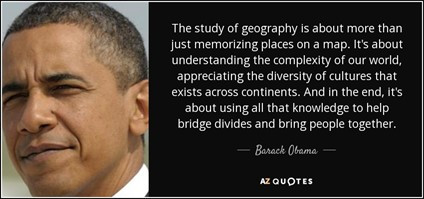
At Adlington Primary School our aims are to fulfil the requirements of the National Curriculum for Geography; providing a broad, balanced and inclusive curriculum; ensuring the progressive development of geographical concepts, knowledge and skills. We aim to inspire in pupils a curiosity and fascination about the world and its people that will remain with them for the rest of their lives. Our curriculum will equip pupils with knowledge about diverse places, people, resources, and natural and human environments, together with a deep understanding of our planet’s key physical and human processes.
By the time they leave Adlington Primary School we want all our children to have developed the following characteristics of successful geographers:
- A passion for and commitment to the subject, and a real sense of curiosity to find out about the world and the people who live there.
- An excellent knowledge of where places are and what they are like.
- An excellent understanding of the ways in which places are interdependent and interconnected and how much human and physical environments are interrelated.
- An extensive base of geographical knowledge and vocabulary.
- Fluency in complex, geographical enquiry and the ability to apply questioning skills and use effective analytical and presentational techniques.
- The ability to reach clear conclusions and develop a reasoned argument to explain findings.
- Significant levels of originality, imagination or creativity as shown in interpretations and representations of the subject matter.
- Appropriately developed and utilised fieldwork and other geographical skills and techniques.
- The ability to express well-balanced opinions, rooted in very good knowledge and understanding about current and contemporary issues in society and the environment.

Implementation – How Will We Deliver the Curriculum?
Knowledge at the Heart of the Curriculum
At Adlington the school’s aims and National Curriculum requirements for Geography are embedded in the design, planning and delivery of our termly Topics which sit within the four pillars of our overall Curriculum Themes and Concepts.
This approach not only ensures the thorough delivery of the aims of each individual subject but also ensures that the connections between subjects are more easily identified and explored in depth within a clear and relevant context.
This encourages and supports children to see the holistic nature of these subjects and helps them in securing knowledge within memorable cognitive schema.
We provide a high-quality geography curriculum that has been carefully designed and sequenced to equip our children with a secure, coherent geographical knowledge of their locality, Britain and the wider world. To learn and explicitly use relevant vocabulary to describe the relationship between human and physical features, their local area and beyond and natural changes that happen over time.
Learning starts in Reception with children learning about their personal geography and developing an understanding of the school grounds and important location beyond the school gates (such as the local church, playground and woodland). Children continue to build their knowledge of their locality in Key Stage 1, where they explore through geographical enquiries, their local communities and develop an understanding of the physical and human features, and how land is used in different ways. The Adlington area is surrounded by a network of waterways, with this in mind children learn about rivers, canals and bodies of water by exploring those that they live in close proximity to. Building on this, children in Key Stage 2 look at how the local geography has been changed by farming and reservoirs.
Each term the children will have opportunities to learn outside the classroom and develop strong geographical skills, such as: map reading and drawing; compass skills and recognising human and physical landmarks.
The aims for the KS1 curriculum are to provide the children with a secure sense of their locality, where they are in the relation to the rest of England, the UK and the wider world beyond to form the foundations for further learning in KS2.
During KS2, the children will continue to build on their understanding of their local area, explore regions of the United Kingdom and build their knowledge of the world through in-depth studies using atlases and digital media.
Our children will also build a secure understanding of the importance and fragility of the world in relation to global warming, environmental issues and sustainability.
Linking Curriculum and Pedagogy
We have developed our pedagogy and curriculum to teach progressively, revisit key concepts, build on prior knowledge and make learning stick. Central to this approach is retrieval practice. Retrieval practice involves deliberately recalling knowledge from memory to enhance learning. The active use of retrieval practice is a core strategy to help the children build their knowledge of the geography curriculum and relevant links to other curriculum subjects. Furthermore, geography units are often closely linked to history units so children can make meaningful connection between subject disciplines. For example, children in Lower KS2 in geography learn about how the physical geography of China influenced the Shang Dynasty. This concept is then developed in Upper KS2 when children examine the effect of landscapes and climate on ancient civilisations as well as settlement and migration on the development of Britain.
Teaching Geography Through Narrative
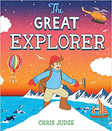
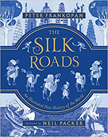
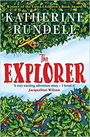
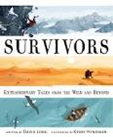
We advocate children learning through stories, including recounts of a diverse range of explorers and pioneers. If we encounter new knowledge within a narrative, we are more likely to retain that knowledge. When possible geography units of work will be delivered through high-quality texts or taught alongside thematically linked texts during English lessons. For example, when learning about ‘Explorers’ in Reception, children will read ‘The Great Explorer’ by Chris Judge. ‘The Silk Roads’ by William Grill is used to inspire KS1 children in their Roads and Routes topic. Similarly, when exploring rainforests in Lower KS2 children will read, ‘The Explorer’ by Katherine Rundell. Whilst studying ‘Extreme Earth,’ Upper KS2 children will use, ‘Survivors,’ by David Johnson Long to build their knowledge and understanding.
Impact – How Do We Know Our Geography Curriculum is Effective?
Progress in Geography is demonstrated through regularly reviewing and analysing children’s work, to ensure that progression of knowledge and skills is taking place. Namely through:
- Looking at pupils’ work, especially over time as they gain skills and knowledge
- Observing how the children use the techniques taught in their fieldwork
- Talking to them about what they know and understand of the key geographical concepts and processes.
Pupil Voice
Our curriculum ethos is that children produce fewer pieces of work that are of high quality. Often, a piece of work will take several weeks to complete and may incorporate learning from other areas of learning. We believe that if children have become knowledgeable and skilful geographers, then they will be able to articulate their understanding with confidence. This is why pupil voice is an important tool in assessing whether children have made progress.
High-Quality Outcomes
We believe that thorough, memorable and valuable work takes time. Therefore, children take longer on fewer pieces of work to ensure they can deepen their knowledge and reflect on their work, taking time to refine and redraft where needed to identify and celebrate progress.